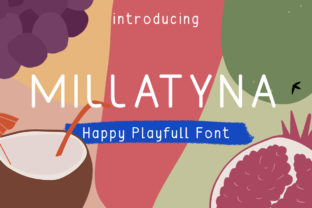
Why Millatyna Is a Standout Choice for Modern Design Projects
Millatyna is a unique and playful display font that feels familiar, yet fresh. Designed to stand out without overwhelming the viewer, it offers a versatile solution for designers looking to add character to their projects. Whether you're working on branding, digital content, or print materials, Millatyna brings a sense of personality and creativity that can elevate your design work.
What Makes Millatyna Distinct?
At first glance, Millatyna may seem like any other display font, but its subtle details set it apart. The font balances whimsy with readability, making it suitable for both decorative and functional use. Its rounded edges and slightly exaggerated serifs give it a friendly, approachable feel while maintaining a level of professionalism that works well in various contexts.
One of the most notable features of Millatyna is its adaptability. It can be used in headlines, logos, and even body text when paired with a complementary sans-serif font. This flexibility makes it an excellent choice for designers who want to experiment with typography without sacrificing clarity.
How Does Millatyna Compare to Similar Fonts?
When comparing Millatyna to other display fonts, it's important to consider factors such as legibility, style, and versatility. Fonts like Quicksand or Playfair Display are popular choices for similar purposes, but they often lean more heavily into either a modern or traditional aesthetic. Millatyna occupies a middle ground, offering a fresh take on classic design elements.
For instance, if you're designing a children's book or a playful brand identity, Millatyna provides a more engaging look than the stark minimalism of a font like Helvetica Neue. At the same time, it doesn't carry the ornate complexity of a font like Garamond, which might be too much for certain applications.
This balance between playfulness and professionalism allows Millatyna to fit into a wide range of design scenarios, from marketing materials to website headers. It's particularly well-suited for projects that aim to convey warmth and approachability without losing visual appeal.
Strengths and Tradeoffs of Using Millatyna
One of the key strengths of Millatyna is its ability to draw attention without being distracting. Its unique shape and rhythm make it ideal for headlines or call-to-action buttons where you want to capture the viewer's eye. Additionally, its clean lines and consistent spacing ensure that it remains readable even at smaller sizes.
However, like many display fonts, Millatyna may not be the best choice for long-form text. While it can be used in body copy with the right pairing, it's generally more effective when reserved for shorter, impactful text elements. Designers should also consider how Millatyna interacts with other fonts in a layout to maintain visual harmony.
Another tradeoff to keep in mind is the learning curve associated with using a less common font. While Millatyna is available through major font platforms, it may require some experimentation to find the perfect application. However, this challenge is often outweighed by the creative possibilities it offers.
Best-Fit Situations for Millatyna
Millatyna shines in situations where a designer wants to add a touch of personality without straying too far from conventional design principles. Here are a few examples of where it excels:
- Branding and Logos: The font's friendly yet professional look makes it a great fit for logos that need to convey approachability and trustworthiness.
- Website Headers and Titles: Its bold presence works well for website headings, especially when paired with a clean sans-serif font for body text.
- Marketing Materials: From flyers to social media posts, Millatyna adds visual interest to promotional content without overshadowing the message.
- Children's Products and Content: The playful nature of the font aligns well with designs targeting younger audiences.
In these scenarios, Millatyna helps create a memorable visual identity that stands out in a crowded market. Its distinctiveness ensures that your design isn't lost in the sea of generic typefaces.
When Might Millatyna Not Be the Right Choice?
While Millatyna is a versatile font, it's not universally applicable. For example, if you're designing a formal document or a corporate report, a more traditional serif font like Times New Roman or Georgia may be more appropriate. Similarly, if your project requires a highly minimalist aesthetic, a font like Roboto or Open Sans could be better suited to the task.
Additionally, if you're working on a multilingual project, it's worth checking whether Millatyna supports all the languages you need. Some display fonts may have limited language support, which could be a consideration for international audiences.
Designers should also evaluate how well Millatyna integrates with their color scheme and overall design system. A mismatch in tone or style could result in a disjointed final product, so it's important to test the font in different contexts before committing to it.
Practical Tips for Working with Millatyna
To get the most out of Millatyna, consider the following tips:
- Use It Sparingly: Since it's a display font, limit its use to headings, titles, or short phrases to avoid overwhelming the reader.
- Pair It Wisely: Combine Millatyna with a complementary sans-serif or serif font to create contrast and improve readability.
- Experiment with Weight and Size: Try different weights (bold, regular) and sizes to see how they affect the overall look of your design.
- Test Across Devices: Ensure that Millatyna renders well on both desktop and mobile screens, especially if it's being used for web content.
By following these guidelines, you can ensure that Millatyna enhances rather than detracts from your design. Its unique charm can bring a fresh perspective to your work, helping you stand out in a competitive design landscape.
In conclusion, Millatyna is a valuable addition to any designer's toolkit. Its blend of playfulness and professionalism makes it a versatile choice for a wide range of projects. By understanding its strengths and limitations, you can decide whether it's the right fit for your next design endeavor.